Nestled within the rugged embrace of the Pyrenees at a latitude of 42.5715623 degrees north and a longitude of 1.9991648 degrees east, Lac des Bouillouses stands as a testament to millions of years of geological artistry. This remarkable mountain lake, perched at an elevation touching two thousand metres, represents far more than a scenic destination for wanderers and nature enthusiasts. It embodies a complex interplay of ancient tectonic forces, glacial carving, and ongoing natural processes that have sculpted one of the most distinctive alpine environments in the Catalan Pyrenees. Understanding the geological narrative behind this protected natural site offers insight into how the very bones of the Earth have been reshaped over aeons to create the breathtaking landscape visitors encounter today.
Geological Formation and the Ancient Bedrock of the Pyrenees
The hercynian orogeny and granite foundations
The story of Lac des Bouillouses begins deep in geological time, during an epoch when the continents themselves were arranged in configurations utterly foreign to our modern maps. The bedrock underlying this alpine lake owes its existence to the Hercynian Orogeny, a monumental mountain-building event that occurred roughly three hundred million years ago during the late Palaeozoic Era. This colossal tectonic collision involved the convergence of ancient continental masses, generating immense pressures and temperatures that metamorphosed existing sediments and created vast bodies of granite through the slow cooling of magma deep beneath the surface. The granitic and metamorphic rocks that now form the structural foundation of the Bouillouses region are relics of this ancient upheaval, having weathered countless cycles of erosion, burial, and re-exposure over the subsequent ages. These crystalline rocks, rich in quartz, feldspar, and mica, possess a distinctive hardness and resistance to weathering that has allowed them to persist through the subsequent geological transformations that would shape the Pyrenees into their present form. The chemical composition of these ancient granites also influences the water chemistry of Lac des Bouillouses itself, contributing to the mineral balance that defines the lake's ecological character.
Glacial Sculpting and the Birth of Mountain Etangs
While the bedrock provides the ancient foundation, the immediate topography surrounding Lac des Bouillouses owes its dramatic contours to far more recent geological events. During the Quaternary Period, spanning roughly the last two and a half million years, the Earth experienced numerous glacial and interglacial cycles. At the peaks of these ice ages, massive glaciers descended from the high peaks of the Pyrenees, including Mont Carlit which looms nearby, carving deep valleys and scooping out vast basins in the underlying rock. The action of these glaciers was relentless and transformative, plucking away blocks of fractured granite and grinding down resistant surfaces into smooth, striated bedrock. As the climate warmed and these glaciers retreated, they left behind a landscape dotted with cirques, moraines, and natural depressions that would eventually fill with meltwater to form the network of mountain lakes or etangs that characterise the Bouillouses plateau today. The basin now occupied by Lac des Bouillouses represents one such glacially carved depression, its shape and depth directly attributable to the erosive power of ice. The surrounding terrain, with its polished rock surfaces and scattered erratic boulders, bears witness to the passage of these ancient rivers of ice, creating a landscape that is both stark and hauntingly beautiful.
Understanding the Unique Alpine Environment at 42.5715623°N, 1.9991648°E
Altitude, Climate and Their Influence on the Landscape
The precise geographical positioning of Lac des Bouillouses at over two thousand metres above sea level places it firmly within the alpine climatic zone, where conditions differ markedly from those found at lower elevations. At this altitude, temperatures remain notably cooler throughout the year, with snow persisting well into late spring and returning early in autumn. The growing season for vegetation is consequently abbreviated, and the biological productivity of both terrestrial and aquatic ecosystems is constrained by these thermal limitations. The thin air at this elevation also means that solar radiation, particularly ultraviolet light, reaches the surface with greater intensity, influencing both the physical weathering of exposed rock and the physiological adaptations of organisms inhabiting the area. Afternoon thunderstorms are a characteristic feature of summer weather patterns in the Pyrenees, as warm air rising from the valleys below meets cooler alpine conditions, creating sudden and sometimes dramatic electrical displays. These meteorological patterns contribute to the ongoing erosion and weathering of the surrounding peaks, while the precipitation they deliver replenishes the lake and feeds the River Têt, which flows from the dam constructed in the early twentieth century to harness the water for electric power generation. The interplay between altitude, climate, and geology creates a dynamic environment where physical processes continue to reshape the landscape, albeit at rates measured in centuries and millennia rather than human lifetimes.
Water Chemistry and Mineral Composition of the Lac
The chemical characteristics of Lac des Bouillouses are intimately linked to the geological substrate from which its waters are derived. Rainwater and snowmelt percolating through the granitic bedrock acquire dissolved minerals through the slow process of chemical weathering, particularly silica and ions of calcium, magnesium, and potassium released from the breakdown of feldspars and micas. The relatively low solubility of granite means that these waters tend to be quite pure, with low concentrations of dissolved solids compared to lakes situated on limestone or other more readily weathered substrates. This oligotrophic character, meaning nutrient-poor, influences the types of aquatic organisms that can thrive in the lake, favouring species adapted to clear, cold, low-nutrient conditions. The transparency of the water allows sunlight to penetrate to considerable depths, supporting photosynthetic organisms in the shallow margins while the deeper waters remain cold and oxygen-rich throughout most of the year. Trace elements derived from the surrounding rocks also play subtle but important roles in the lake's ecology, influencing everything from algal growth to the health of invertebrate populations. The construction of the dam at Bouillouses in the early twentieth century altered the natural hydrological regime to some degree, creating a reservoir whose water levels fluctuate according to human demands for electric power, yet the fundamental chemical signature of the water remains rooted in the ancient granite that forms its catchment.
The Natural History and Ecological Significance of Lac des Bouillouses
Endemic Flora, Fauna and the Protected Regional Parc
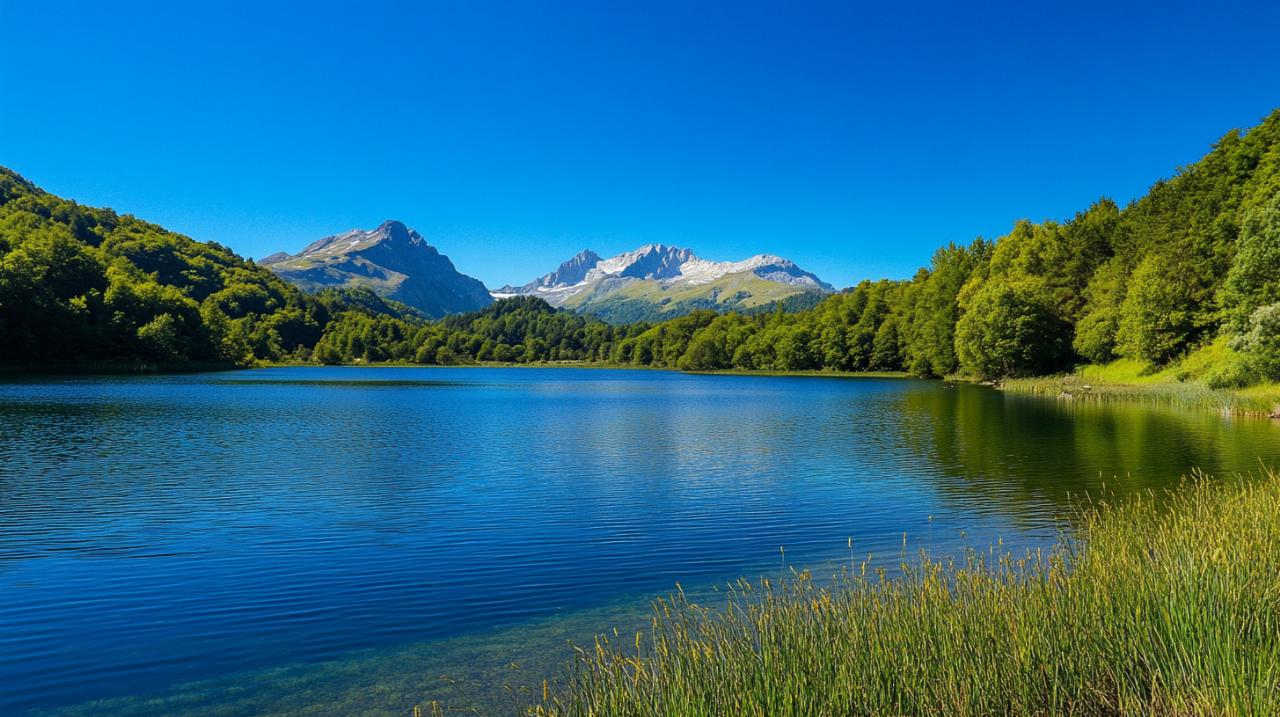 The ecological community surrounding Lac des Bouillouses reflects both the harsh alpine conditions and the unique geological setting. Vegetation in this zone is dominated by hardy perennial species capable of withstanding prolonged snow cover, intense solar radiation, and nutrient-poor soils derived from weathered granite. Cushion plants, dwarf shrubs, and alpine grasses form the matrix of the vegetation, interspersed with seasonal displays of wildflowers including various species of gentians, saxifrages, and thistles whose vibrant blooms provide a stark contrast to the austere grey of the surrounding rock. Some plant species found here are endemic to the Pyrenean chain, having evolved in isolation following the retreat of the glaciers and representing unique genetic lineages found nowhere else in Europe. The fauna of the region is equally distinctive, with populations of chamois and marmots inhabiting the rocky slopes, while the skies above may host the majestic gypaete barbu, or bearded vulture, whose impressive wingspan and distinctive silhouette make it one of the most sought-after sightings for wildlife enthusiasts. The aquatic ecosystems of the lake itself support populations of trout and various invertebrate species adapted to cold, oxygen-rich waters. The entire area falls within the Regional Catalan Pyrenees Natural Park, a protected designation that recognises the ecological and geological significance of this landscape and aims to balance conservation with the sustainable tourism that has become economically important for surrounding communities. The grazing of French and Spanish herds side by side on the high pastures surrounding the lake represents a continuation of traditional land use practices that have shaped these mountain landscapes for centuries.
Geological Data and Scientific Research in the Catalanes Pyrenees
Scientific interest in Lac des Bouillouses extends beyond its immediate aesthetic and recreational appeal. The site serves as a valuable natural laboratory for researchers investigating a wide range of geological and ecological processes. Sediment cores extracted from the lake bed preserve a detailed record of environmental change spanning thousands of years, with layers of accumulated organic matter, mineral grains, and pollen providing data on past climate fluctuations, vegetation shifts, and even the timing of glacial advances and retreats. Isotopic analysis of these sediments can reveal changes in precipitation patterns and temperature, while the presence or absence of certain microfossils indicates shifts in water chemistry and nutrient availability. The exposed bedrock surrounding the lake offers opportunities for structural geologists to study the deformation patterns preserved in the ancient Hercynian rocks, including folds, faults, and shear zones that tell the story of the tectonic forces that shaped this region. Glacial geomorphologists examine the landforms left behind by retreating ice masses, measuring the dimensions of moraines and the orientations of glacial striations to reconstruct the flow patterns and dynamics of past ice sheets. Hydrologists monitor the lake's water balance, tracking inputs from precipitation and snowmelt against outputs through the dam and evaporation, with particular attention to how climate warming may be altering these patterns. This ongoing research contributes not only to our understanding of the Pyrenees themselves but also to broader scientific questions about mountain building, glacial processes, and ecosystem responses to environmental change.
Exploring the Terrain: Rambling Routes and Geographical Features
Navigating Sentiers, Balises and the Mont Carlit Approaches
For those drawn to explore the geological wonders of Lac des Bouillouses on foot, the network of marked trails provides access to a remarkable diversity of terrain and perspectives. Sentiers, the French term for footpaths, wind through the landscape following natural contours and connecting the various etangs that dot the plateau. These paths are marked with balises, the painted blazes or signposts that guide walkers and prevent them from straying into potentially hazardous terrain. A gentle boucle, or circular route, around the immediate shores of Lac des Bouillouses offers an accessible introduction to the area, allowing visitors to appreciate the interplay of water, rock, and sky that defines this alpine environment. More ambitious randonnees, or hiking routes, lead toward the summit of Mont Carlit, the highest peak in the Catalan Pyrenees, where the ascent traverses progressively older geological units and affords panoramic vistas across the surrounding ranges. Along these trails, observant walkers encounter evidence of the geological processes discussed earlier, from glacial erratics perched improbably on bedrock pedestals to fresh rockfall deposits testifying to the ongoing erosion of the peaks. The information point near the dam provides advice and route brochures for visitors, helping them select walks appropriate to their experience and interests. During summer, organised animations offer guided walks that highlight both the geological features and the ecological significance of the protected landscape.
Accessing Lac des Bouillouses from Odeillo, Mont Louis and Romeu
Reaching Lac des Bouillouses requires navigating both the geography of the eastern Pyrenees and the practical considerations of mountain access. The lake stands as the highest mountain site accessible by road and chairlift in the range, yet vehicle access is deliberately restricted during summer months to protect this sensitive environment from the impacts of excessive traffic. The Route des Bouillouses, the mountain road leading to the lake, becomes subject to these restrictions, with shuttle buses operating from Pla de Barrès to the Bouillouses Dam serving as the primary means of transport for most visitors. These services operate from early July through early September, with additional weekend services in June and September, running large buses accommodating fifty-five passengers from seven in the morning until seven in the evening, supplemented by smaller vehicles in the afternoon and evening. The shuttle system includes optional stops at points of geological and recreational interest, including climbing rocks, the Lake of Aude, and the Llivia Bridge, allowing visitors to explore the broader geographical context of the area. Access roads lead to Pla de Barrès from several directions, with routes from Odeillo, Mont Louis, Romeu, and Cabanasse converging on this staging point. The approach roads themselves traverse diverse geological terrains, ascending through valleys carved by ancient glaciers and rivers, passing outcrops that reveal the structure of the underlying bedrock. For those arriving from the Spain-France border region, the proximity of Lac des Bouillouses to international boundaries underscores its position within a transnational mountain system where geological and ecological processes recognise no political divisions. The combination of regulated access and well-maintained infrastructure reflects a commitment to sustainable mountain tourism, ensuring that future generations will continue to marvel at the geological heritage preserved in this remarkable alpine landscape.